Plate 002 · Cover
Workflows · 2025
Workflows — branching logic, conditional triggers, and a visual canvas that scaled the original Follow Up Series into a full automation platform.
Fig. 01
Evolving automation for small businesses — from a 1998 linear follow-up series to a visual, branching workflow platform that kept AWeber competitive across three decades.
The original Follow Up Series defined an industry — and then the industry moved on.
AWeber pioneered email automation in 1998 with its “Follow Up Series” feature, enabling small businesses to automatically send a sequence of emails to new subscribers. This innovation fueled exponential growth and became the product's signature feature.
By 2015, however, the market had changed. Competitors offered more flexible automation, and customers increasingly expected sophisticated, personalized journeys.
The legacy Follow Up Series was too rigid: it supported only a single, linear sequence and lacked modern triggers or conditions. For AWeber to remain competitive, it needed a new automation framework that preserved its hallmark ease-of-use while supporting more advanced marketing strategies.
The first as a hands-on designer reimagining the feature; the second as a leader guiding a team through its next evolution.
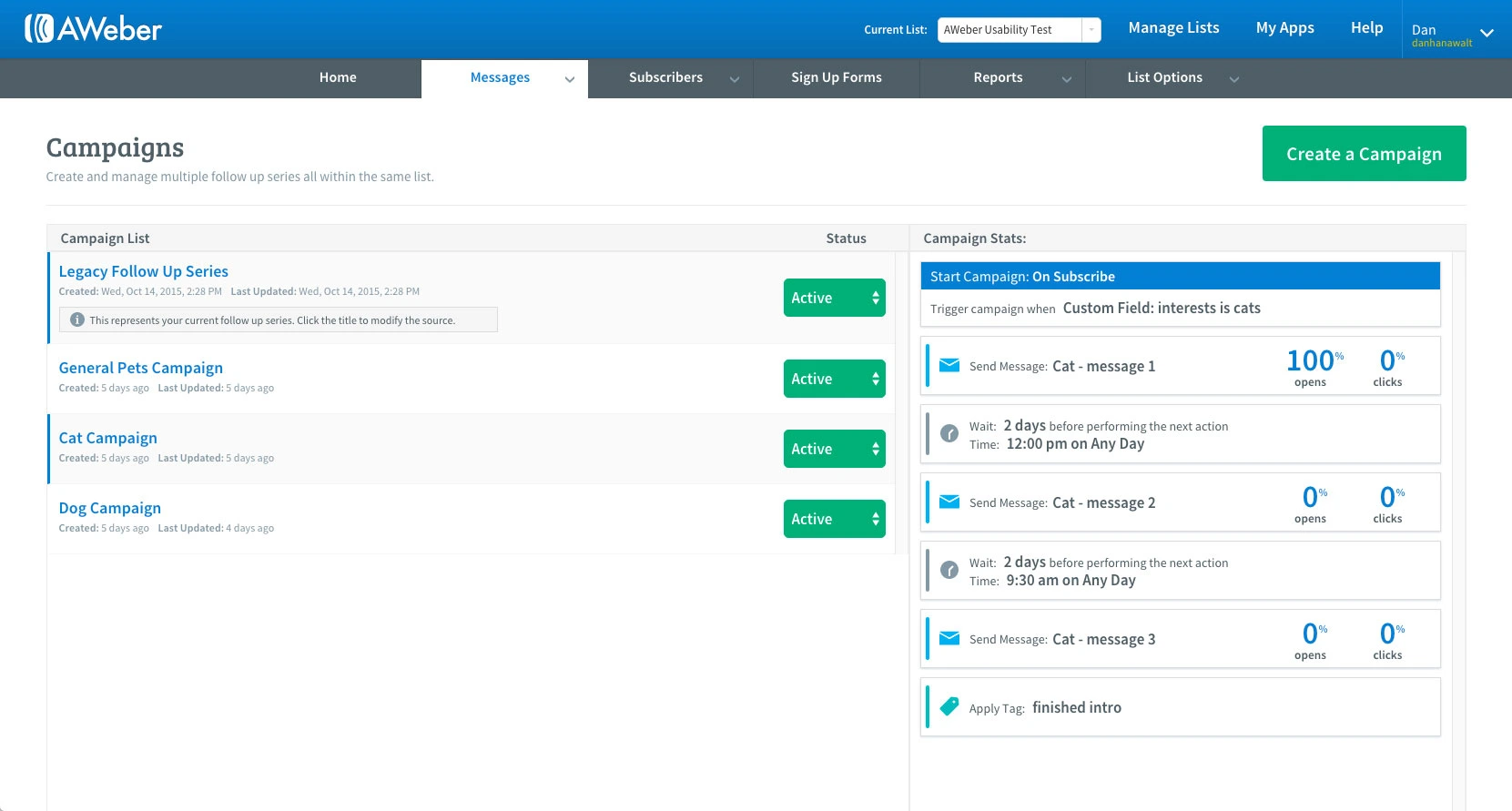
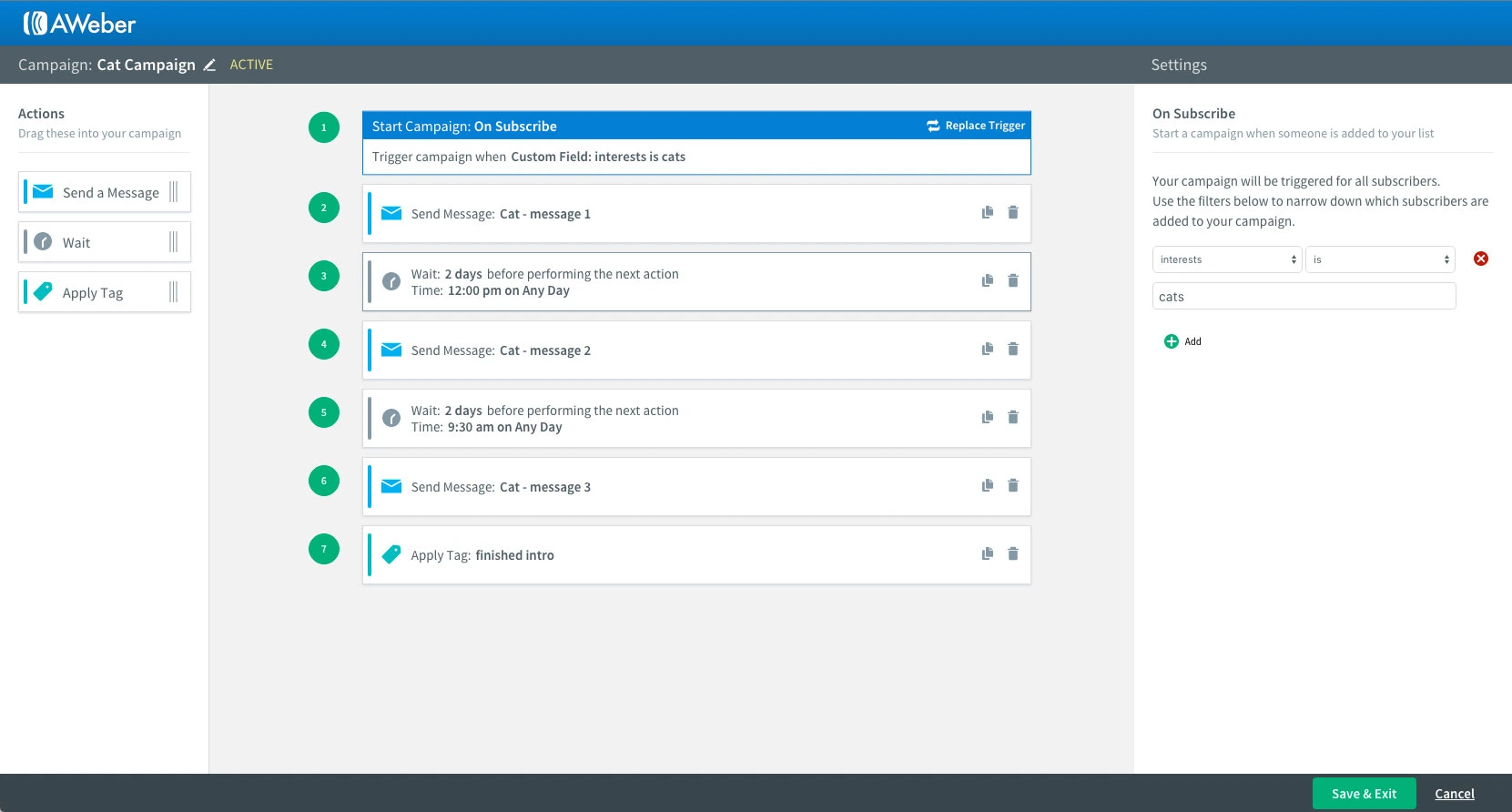
I was responsible for reimagining the Follow Up Series feature as a modern, visual automation builder. I partnered with Product and Engineering to design a drag-and-drop experience that allowed small business marketers to create multiple triggered sequences without technical expertise.
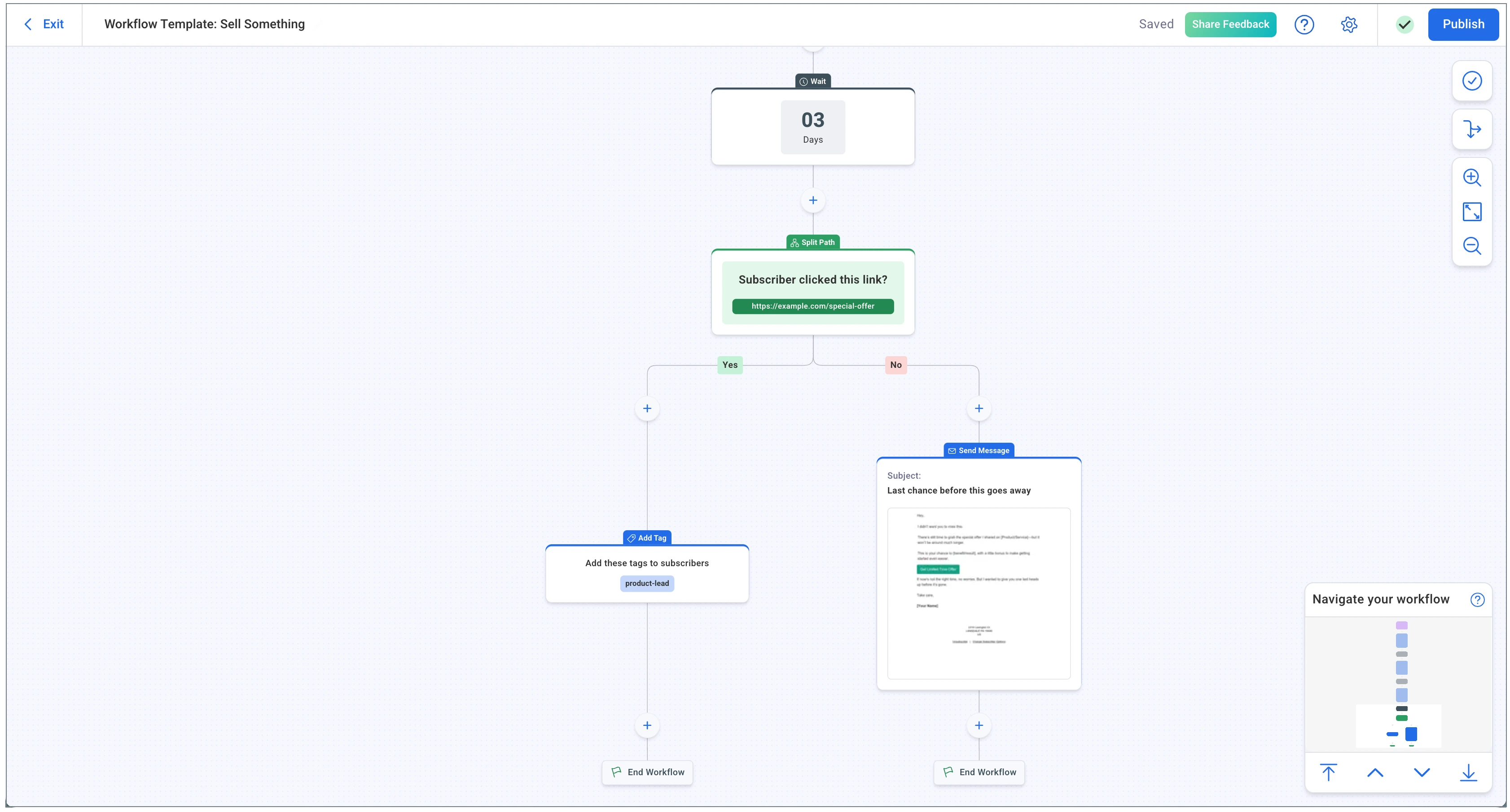
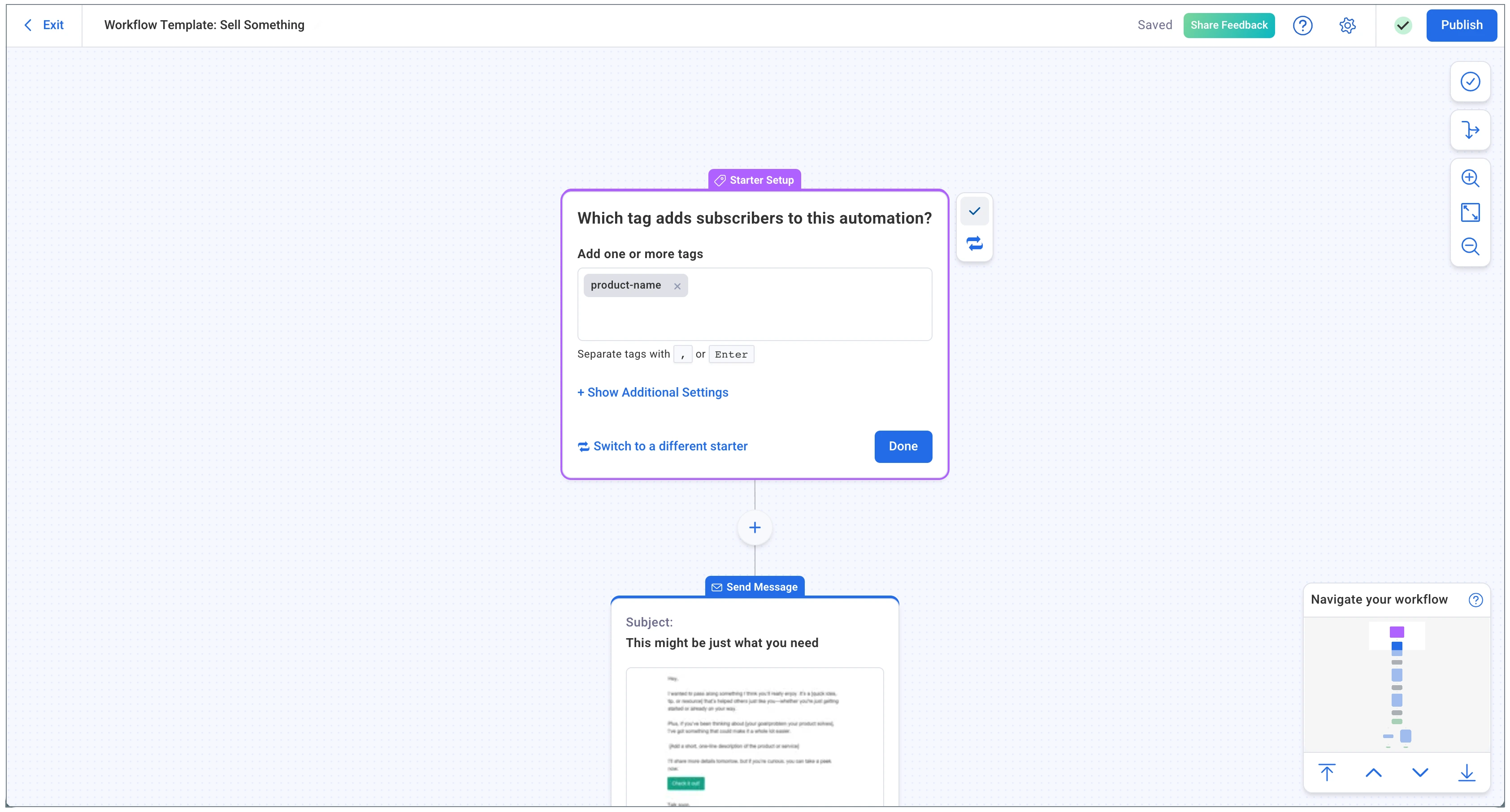
Nearly a decade later, I guided my team through the next major evolution: Workflows. This redesign introduced branching logic, transforming Campaigns into a full-fledged automation platform. My role centered on design direction, critiques, defining new elements for AWeber's design system, and ensuring the experience stayed approachable while supporting greater sophistication.
Frame automation as a business enabler — then build a foundation flexible enough to outlive its first generation.
Positioned automation not as a technical feature, but as a business enabler — saving time for small business owners while giving them enterprise-level capabilities in an accessible package.
First simplified automation with Campaigns through a drag-and-drop builder and flexible triggers; later extended that foundation into Workflows with branching logic, enabling marketers to design truly personalized customer journeys.
Built Campaigns in 2015 with extensibility in mind, anticipating that conditional logic and branching would become critical. This foresight made the Workflows redesign possible without breaking the mental models of long-time customers.
In the Workflows phase, shifted from hands-on execution to team leadership, ensuring consistency in UX and visual design while aligning strategy across product, engineering, and customer-facing teams.
Design can both preserve simplicity and unlock sophistication — helping a small-business-focused company continue to differentiate in a crowded market.
Nearly a decade as AWeber's flagship automation tool — and a foundation that scaled into the next generation without breaking the first.
Campaigns — now Workflows — remained a cornerstone feature that sustained AWeber's competitiveness in the crowded email marketing landscape, balancing ease-of-use with sophistication in a way few competitors matched.
Marketing automation became visual, accessible, and customizable — empowering small businesses to send the right message at the right time, without technical overhead.
The evolution from Follow Up Series to Campaigns to Workflows positioned AWeber as both approachable and powerful — a balance few competitors managed to strike.
Demonstrated how early design vision could scale into long-term product strategy, and how UX leadership could guide a product through multiple generations of growth.
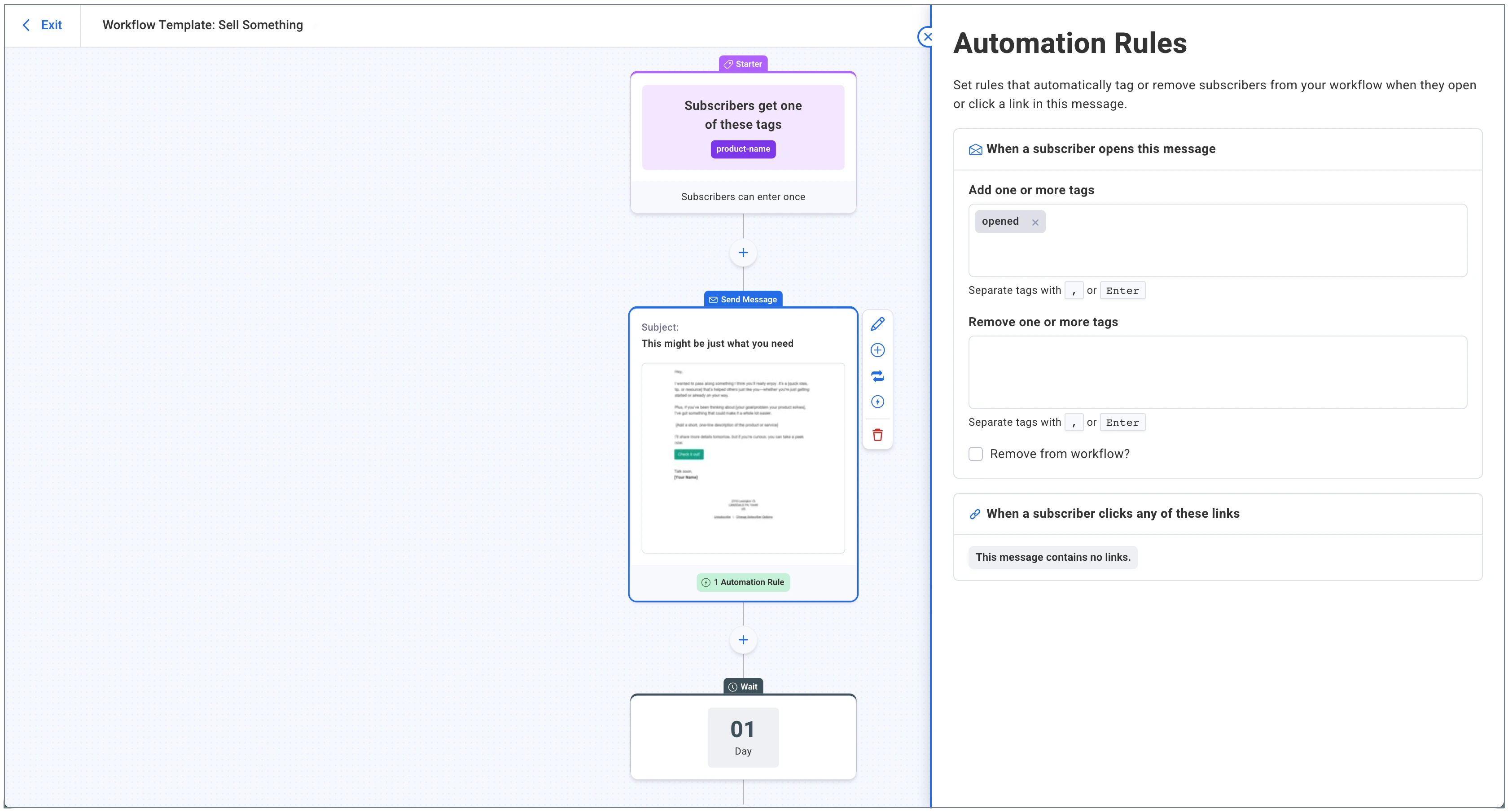
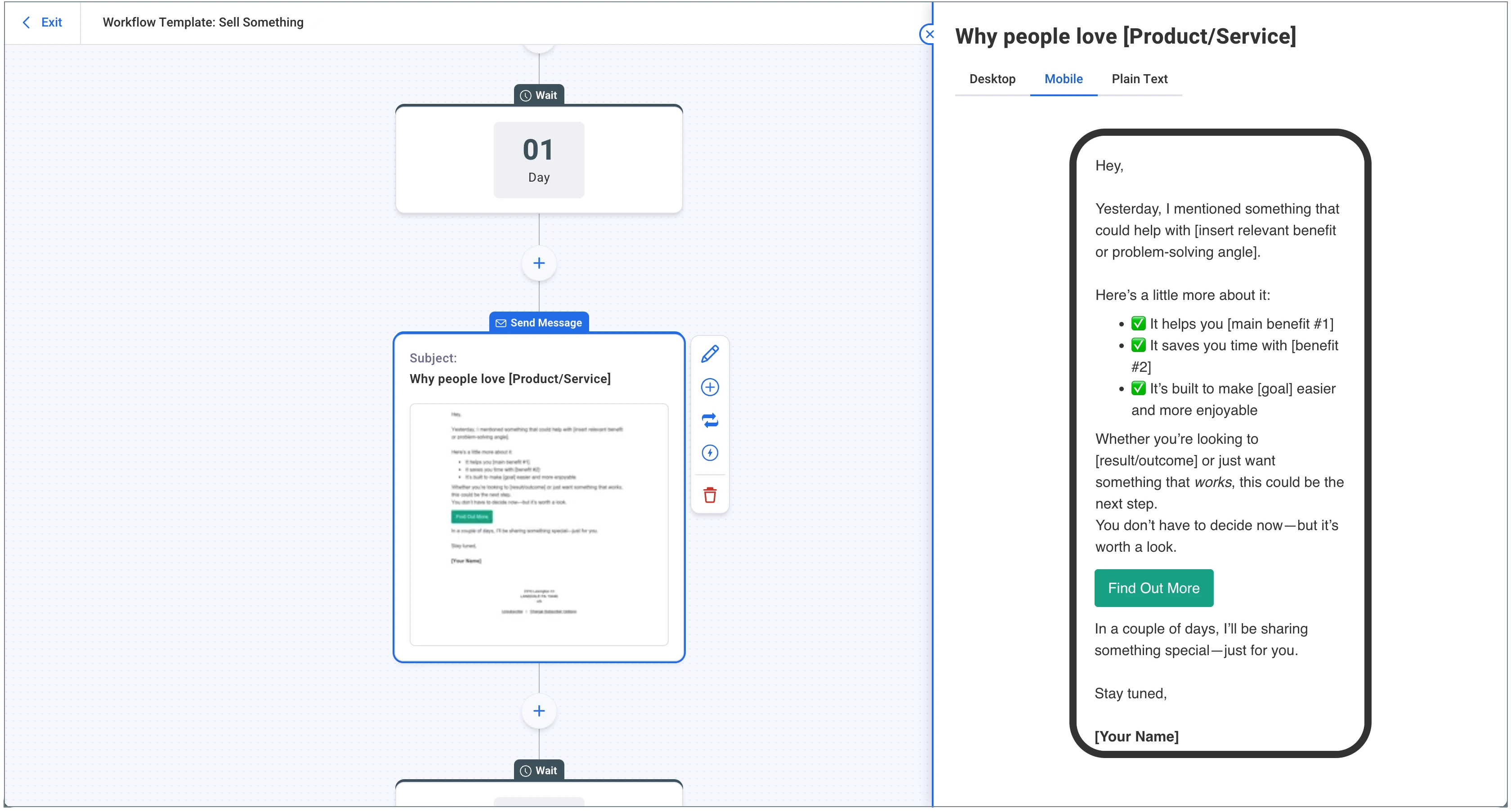
The 2015 index and editor, then the 2025 redesign — branching, step editing, message automation, and preview.